 SEA News 2026
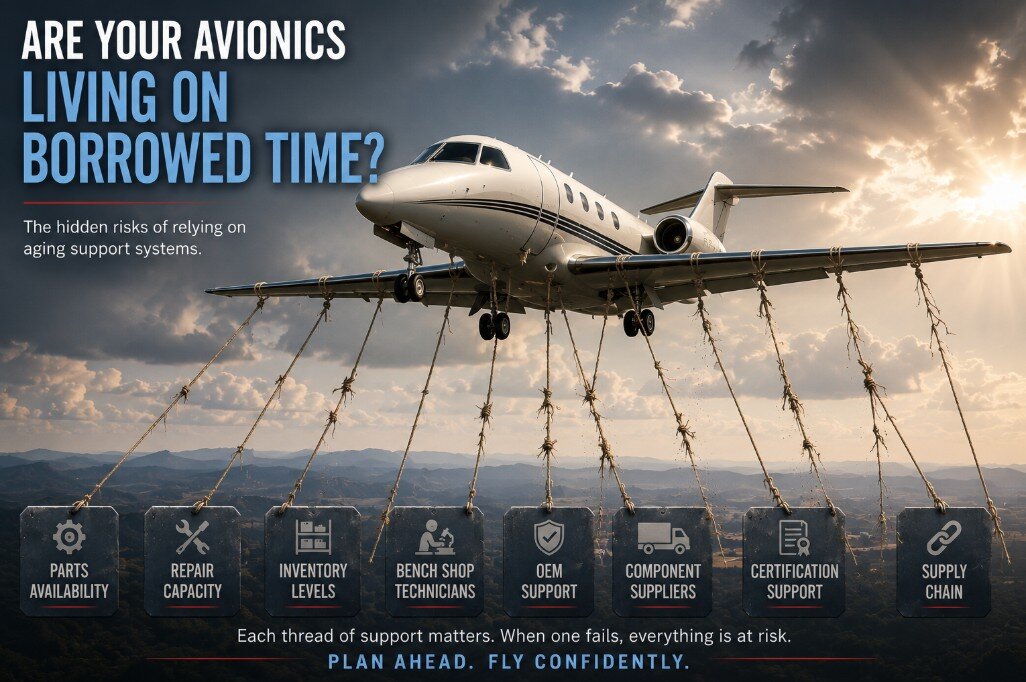
For decades aircraft owners and operators have relied on a familiar approach to maintaining their avionics - something fails, send it to a repair station, reinstall it, and continue flying. That model served the aviation industry well for many years, but today's market has changed and the economics of repairing legacy avionics have changed with it.
While many older avionics systems continue to provide reliable service, the support infrastructure behind them is becoming increasingly difficult to sustain. Throughout the industry, repair stations, manufacturers, and operators are facing a convergence of challenges that are reshaping the future of legacy avionics support.
One of the most significant factors is the growing shortage of experienced avionics bench technicians. Many highly skilled technicians who spent decades repairing analog and early digital avionics have retired or are nearing retirement, while fewer new technicians are entering the field with expertise on legacy equipment. As a result, repairs that once took days can now require weeks or even months, particularly for products that require specialized troubleshooting or component-level repair.
The COVID-19 pandemic further accelerated changes throughout the aerospace supply chain. Manufacturers and suppliers reevaluated inventory strategies, reduced stocking levels, consolidated operations, and shifted toward leaner production models. Although many supply chain challenges have improved since 2020, operators continue to experience extended lead times and reduced availability of ready-to-ship replacement equipment.
At the same time, the avionics industry has experienced continued consolidation through mergers, acquisitions, and licensing agreements. In many cases, legacy product lines have changed ownership as companies focus resources on newer technologies. While these transitions often extend the availability of legacy products, they can also result in reduced manufacturing volumes, fewer repair sources, longer turnaround times, and significantly higher prices for replacement parts.
The result is a growing disconnect between the value of an aging avionics system and the cost required to keep it operating. Components that were once routinely repaired are becoming increasingly difficult or economically impractical to support. In many cases, a repair estimate for a decades old unit can approach or exceed the cost of installing a modern replacement that offers substantially greater capability and long-term support.
For operators maintaining aging aircraft, this raises an important question: Is it better to continue repairing yesterday's technology or invest in tomorrow's?
Today's avionics market offers more upgrade opportunities than ever before. Modern digital displays, GPS navigators, ADS-B solutions, weather radar systems, engine monitoring, and integrated flight instruments have become increasingly capable while offering improved reliability, manufacturer support, and future software development.
This is particularly true within the general aviation market where certified retrofit solutions have expanded dramatically over the past decade. Many aircraft that once required expensive custom modifications can now be upgraded using FAA-approved solutions that improve safety, reduce maintenance costs, and enhance operational capability.
That doesn't mean every legacy system should be replaced immediately. Many continue to perform well and remain appropriate for their intended mission. However, operators should begin viewing avionics upgrades as part of a long-term maintenance strategy rather than simply a discretionary improvement. Waiting until a critical component becomes unrepairable or unavailable often limits upgrade options and can result in extended aircraft downtime.
Planning ahead allows owners to make thoughtful decisions based on operational needs, available technology, scheduled maintenance, and budget. Not on the urgency created by an unexpected equipment failure.
The aviation industry has always evolved through innovation. While legacy avionics have served operators exceptionally well for decades, the realities of today's repair environment suggest that modernization is becoming less about adding new features and more about ensuring continued supportability for years to come.
For many aircraft owners, the question is no longer if modernization should be considered but when.
